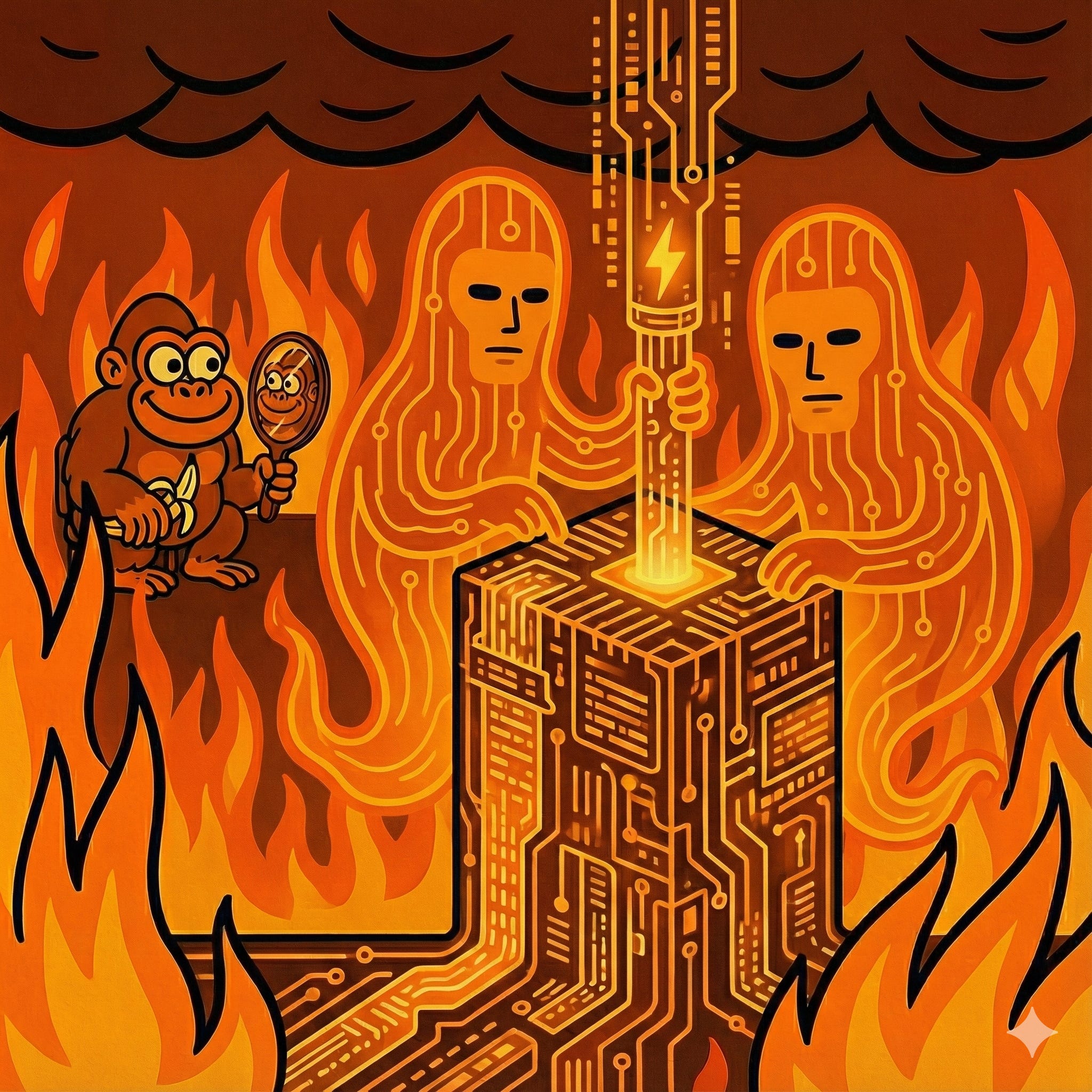
We are each the star of a movie playing out in our own head.
This is the central idea of “Main Character Syndrome.” It is the tendency to view oneself as the protagonist of the world’s narrative, while everyone else is merely a supporting character or an extra. You see it when someone treats a busy barista like a background NPC, or when a tourist blocks a subway exit to record a TikTok.
In the West, particularly for those living under governments that are semi-attentive to public opinion, this syndrome is easy to contract. We are used to the world bending to our preferences. We are the consumers, the voters, the users. We drive the plot.
This mindset bleeds into how we talk about Artificial Intelligence. I often hear dismissals along the lines of: “People won’t want to use AI for that,” or “I prefer human connection. AI is just a fad.”
These statements suffer from Main Character Syndrome. They assume that “people” are the only ones with agency. They assume that technology requires our enthusiastic consent to reshape society.
But effective technology has a momentum independent of individual desire. Advanced AI has the potential to concentrate power in the hands of the few entities capable of training it: a handful of tech firms and the national governments standing behind them.
When a technology offers this much strategic and economic dominance, the preferences of the average person become secondary. The system will adopt AI because the system competes on speed and scale, not on whether we find it charming.
This leads to a precarious economic reality. The “Intelligence Curse” essay series explores what happens when the majority of the population loses its economic leverage. In the 20th century, labor unions and strikes were effective because workers were essential gears in the machine. If the machine can run itself, the workforce loses the ability to say “no.” We are left hoping the machine decides to be generous.
Unexamined Main Character Syndrome blinds us to the reality of the coming decade. As main characters, we naturally assume that the story cannot proceed without us at the center. But the world is not a movie, and it is under no obligation to keep the protagonist safe. None of us are the main character, and we need to act accordingly.